
Before the holidays and winter approached, a small group from our foundation met in San Juan, Puerto Rico, in order to deeply explore one of the most challenging philosophical questions: What are the limits of philosophy today?
Philosophy, as the love and pursuit of wisdom, is not supposed to be constrained. But as any orientation, it can only operate within certain leeways, which emerge both from within and without. Over time, philosophy has developed within certain structures that it may have grown blind to. At our recent FPO meeting at San Juan, Puerto Rico, we therefore focused on the limits that philosophical curiosity faces today. In orientation-philosophical language, we asked: What are the leeways of philosophizing today?
Our founder Mike Hodges opened the gathering with a provocative set of aphorisms titled “Limits of Philosophizing from the Fear of the Unknown,” challenging participants to think dangerously and push philosophy’s boundaries: “It’s all up for grabs: Nothing is beyond philosophy.” Reinhard Mueller reported on results and insights from the recent FPO virtual seminar on the Limits of Philosophy, highlighting how philosophizing today inevitably involves power and morals as well as inclusion and exclusion. Werner Stegmaier, author of the philosophy of orientation, spoke about the “Limits of Philosophizing in the Search for Hold,” focusing on his own experiences and explorations of philosophical boundaries, emphasizing those philosophers who have most daringly pushed the boundaries of philosophy in recent history, reorienting and surpassing even their very own earlier philosophies, namely: Nietzsche, Heidegger, and Wittgenstein.
Various contributions enriched our discussions in this dangerous philosophical territory. Elizabeth Richmond-Garza, Enrico Müller, and James Madden explored the notion of the “unlimited” in philosophy – to apeiron, as Anaximander called it – and its significance for human life. Kathleen Higgins and Douglas Giles problematized the scientific form of communication as a guiding paradigm in current academic philosophizing. Hans-Georg Moeller and Manuel Knoll engaged with the expansions and constraints of institutional philosophizing today in relation to media and technology. Enes Sütütemiz challenged the notion of philosophy’s limits within Nietzsche’s concept of the Dionysian and continual self-overcoming.
We audio-recorded the meeting and are currently preparing a book publication capturing both the contributions and the discussions on Orientations Press.

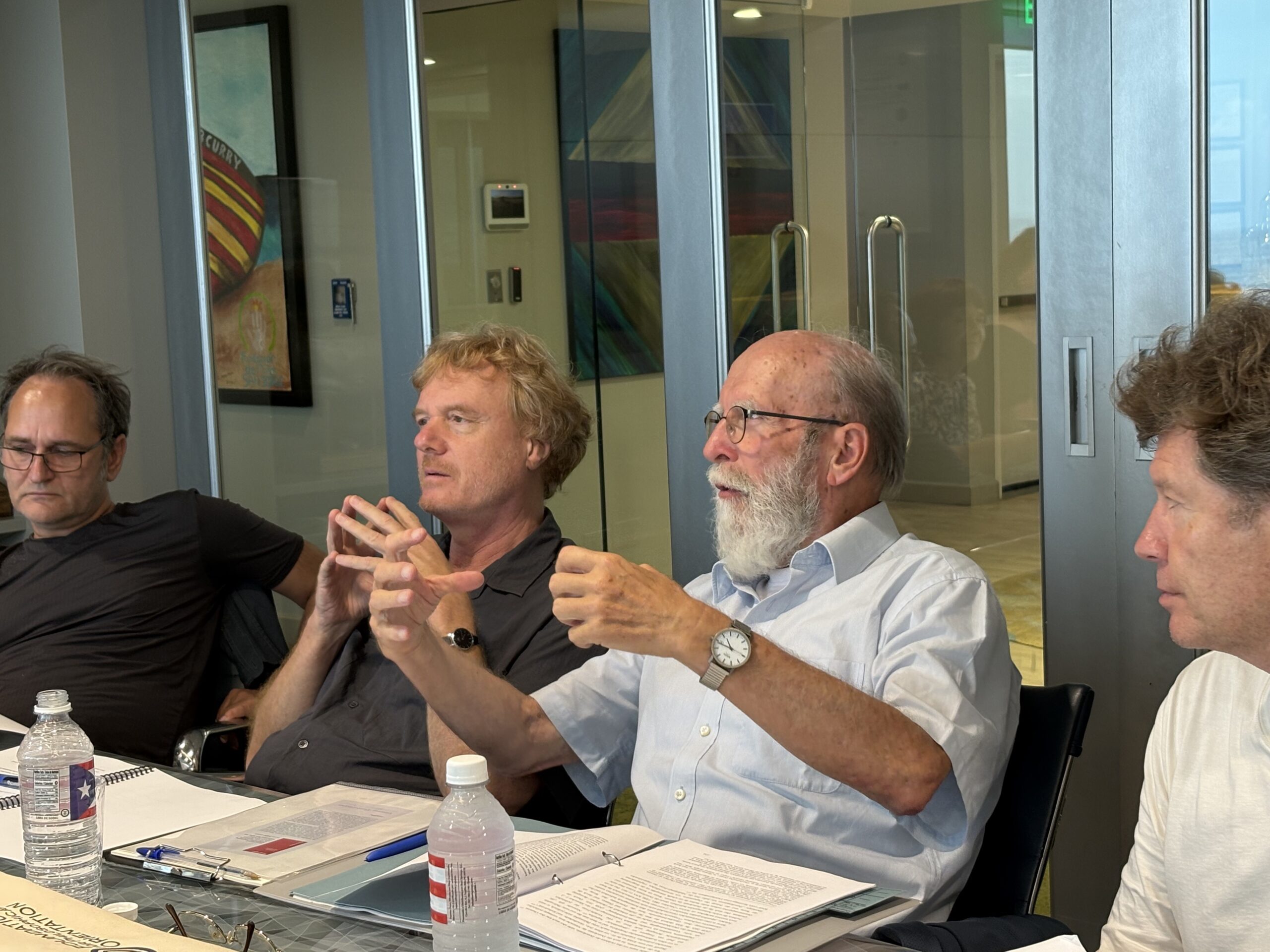
Dr. Enrico Müller, Prof. Hans-Georg Moeller, Prof. Werner Stegmaier, and Prof. Manuel Knoll
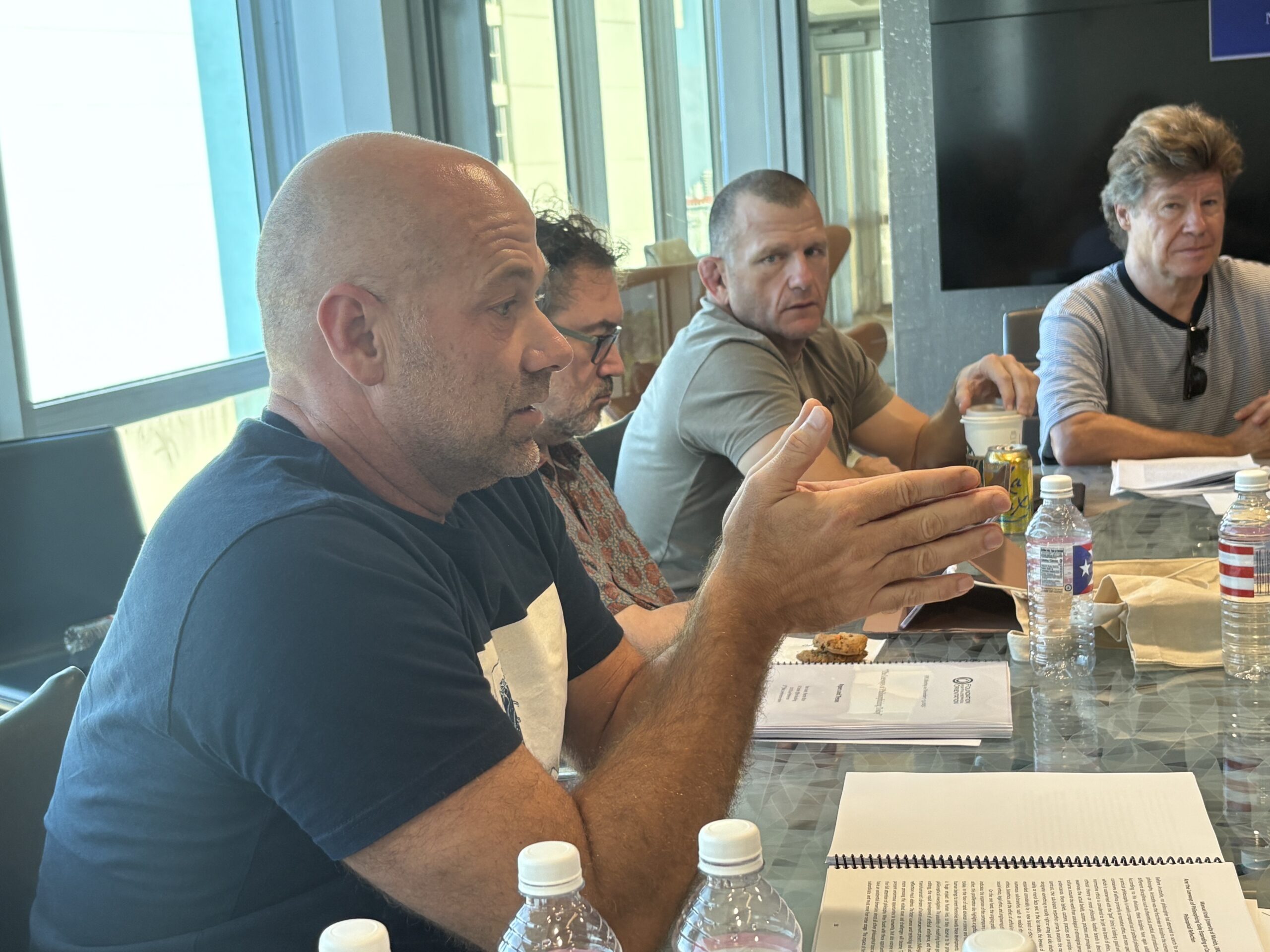
Mike Hodges, Dr. Douglas Giles, Prof. James Madden, and Prof. Manuel Knoll